Thousands of years after someone first rolled a log under a heavy stone, wheels are still the most practical way to get a robot from A to B. Simple, efficient, and surprisingly nuanced once you start thinking about grip, diameter, and omni-directional movement.
What is a Wheel?
In robotics, a wheel is a round rolling element attached to a motor shaft that converts rotational motion into linear travel. That sounds obvious — but the type of wheel matters enormously.
Common wheel styles for robot builders:
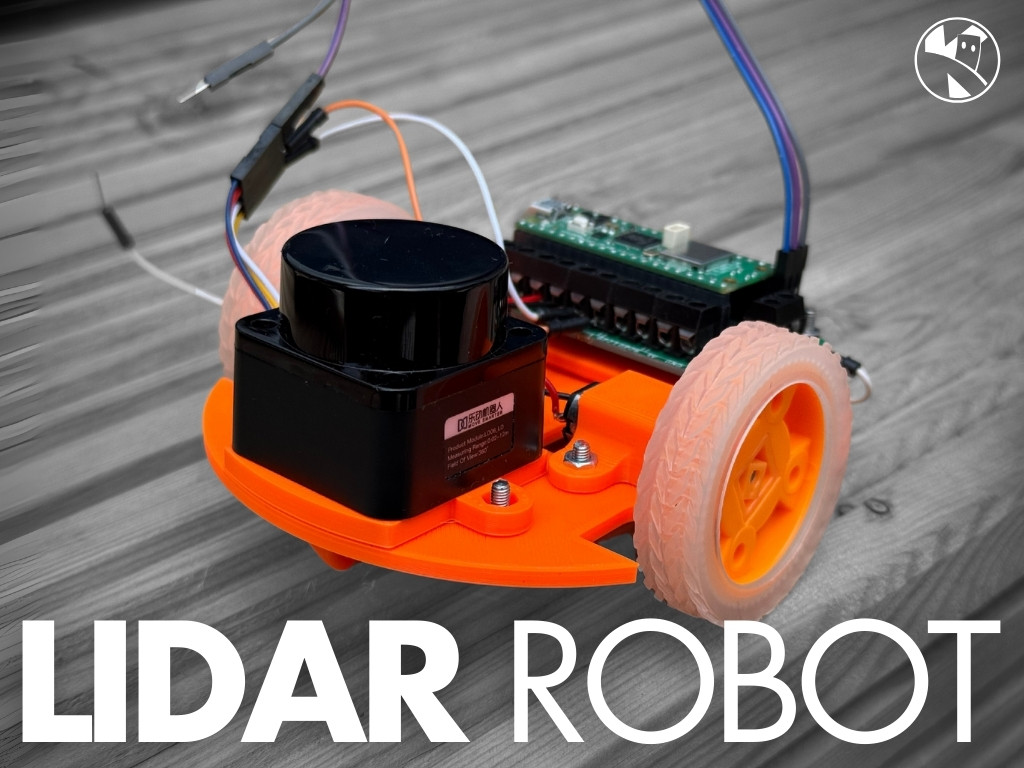
- Rubber-tyred wheels — grippy, cheap, great on smooth floors. The yellow TT motor wheel is the classic beginner choice.
- Omni wheels — a ring of small passive rollers around the rim lets the wheel slide sideways. Two or three of these let a robot spin in place or strafe.
- Mecanum wheels — rollers set at 45° give full holonomic movement: forwards, sideways, and diagonal without turning the chassis.
- 3D-printed wheels — customisable diameter, tread pattern, and hub style. Perfect for matching a specific motor shaft size or achieving a particular aesthetic.
Wheel diameter directly affects speed and torque. A bigger wheel covers more ground per revolution (faster) but needs more torque to get moving. A smaller wheel gives you more pushing force but lower top speed.
Standard, omni and mecanum
What sets the three drive wheels apart is the rollers around the rim. A standard wheel has none (it only rolls forwards/back). An omni wheel adds rollers facing sideways so it can also slide left/right. A mecanum wheel sets its rollers at 45°, which is what gives a robot full diagonal and strafing movement:
   Standard          Omni              Mecanum
   (no rollers)      (rollers ⟂)       (rollers at 45°)

     ┌────┐          ┌─╫──╫─┐          ┌─╲──╲─┐
     │    │          │      │          │      │
     │    │          ╪      ╪          ╲      ╲
     │    │          │      │          │      │
     └────┘          └─╫──╫─┘          └─╲──╲─┘

   forward/back     + sideways         + diagonal /
   only             slide              strafe + spin
Bigger versus smaller
Wheel size is a straight trade-off between speed and pushing power, because the same motor torque acts over a different radius:
   Small wheel              Large wheel

      ( ● )                  (   ●   )
   more torque,           more speed,
   less speed             less torque
   (good on carpet,       (good on smooth
    climbing)              floors, distance)
For a differential-drive robot, fixing the wheel diameter also fixes the maths between motor revolutions and distance travelled — which is exactly what you need once you start writing navigation code.
Why robot builders care
Wheel choice is one of the first real design decisions you make. Get it wrong and your robot either spins on the spot (not enough grip), strains its motors (too heavy), or can’t handle the surface (too small for carpet, too wide for tight corridors).
For a simple two-wheeled differential drive robot, matching wheel diameter to motor gearing gives you a predictable relationship between encoder ticks and distance travelled — essential once you start writing navigation code.
Tyre material matters too. Hard plastic slides; rubber grips. On carpet or any textured surface, you want rubber or TPU (a flexible filament) wrapped around the wheel.
Get started
A great first project is building a two-wheeled robot with 3D-printed wheels sized to fit your motor shafts exactly. Kevin’s BurgerBot is a brilliant starting point — it uses 3D-printed wheels on TT motors and the whole chassis is printable at home.
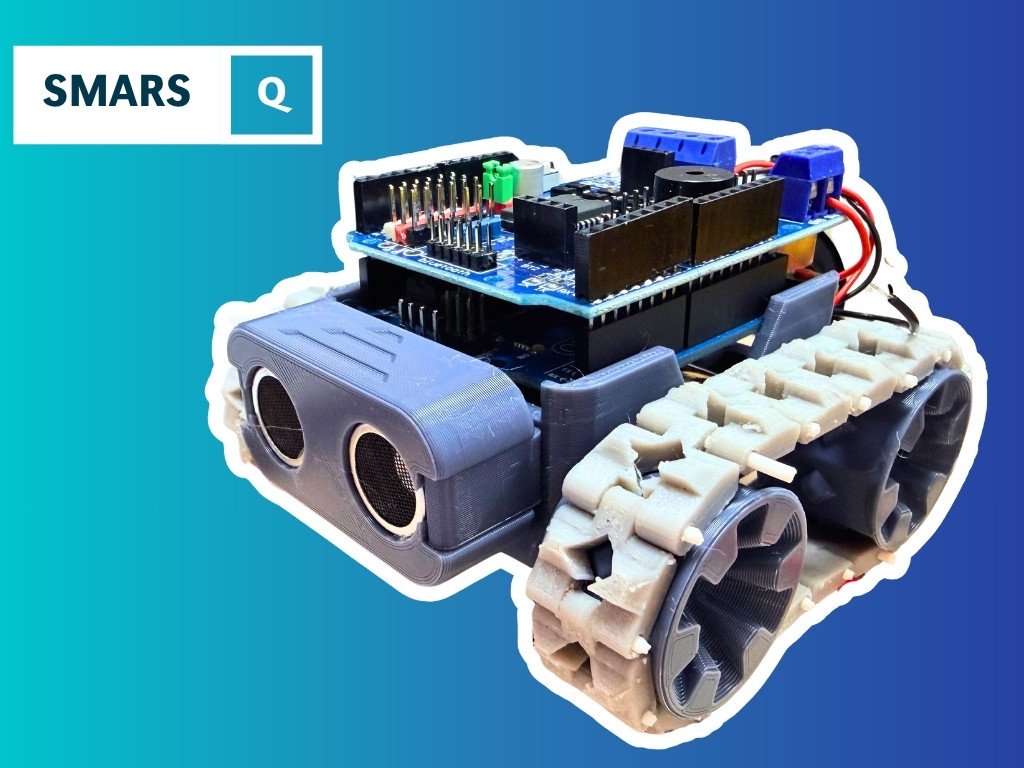
If you want to go further, the SMARS course shows you how to build and program a modular robot whose wheel and track options are interchangeable — swap between wheeled and tracked locomotion to see the real-world difference in grip and manoeuvrability.
For a taste of advanced wheel types, check out the Rover the Mecanum Robot project. Mecanum wheels let Rover strafe sideways and spin on the spot — the kind of movement that makes people stop and stare.
Print a wheel, bolt it to a motor, press it to the floor, and watch it roll. That first metre of motion is the moment your robot stops being a circuit and starts being a vehicle.
Reacts well with
More Making & Design
- GrGears
- Pr3D Printing
- CdCAD
- FuFusion 360
- FcFreeCAD
- LcLaser Cutting
- ChChassis Design
- TkTank Tracks
- LeLEGO Robotics
- WeWearables
Learn more on KevsRobots
Articles to read





Share this element
This page is awesome? Show some love!Did you find this content useful?
If you found this high quality content useful please consider supporting my work, so I can continue to create more content for you.
I give away all my content for free: Weekly video content on YouTube, 3d Printable designs, Programs and Code, Reviews and Project write-ups, but 98% of visitors don't give back, they simply read/watch, download and go. If everyone who reads or watches my content, who likes it, helps fund it just a little, my future would be more secure for years to come. A price of a cup of coffee is all I ask.
There are a couple of ways you can support my work financially:
If you can't afford to provide any financial support, you can also help me grow my influence by doing the following:
Thank you again for your support and helping me grow my hobby into a business I can sustain.
- Kevin McAleer
Comments