There’s no rulebook that says robots have to be polite. Combat robotics is where engineering meets full-contact sport — and it’s one of the most exhilarating ways to put your maker skills to the test.
What is Combat Robotics?
Combat robotics means building a robot specifically to fight other robots inside an arena. Matches are won by disabling, flipping, or immobilising the opponent before time runs out.
Robots are organised by weight class. The most accessible classes for makers are:
- Antweight — 150 g (UK) or 1 lb (US). Fits in your hand. Cheap to build and repair.
- Beetleweight — 1.36 kg (3 lb). Small enough to post, serious enough to cause real damage.
- Featherweight — 13.6 kg (30 lb). Proper competition weight, closer to what you’d see on TV.
Most first-time builders start at antweight or beetleweight — the parts are affordable, and you can print or laser-cut the chassis at home.
Weapons break down into a few flavours: spinners use a heavy rotating disc or bar to store kinetic energy (and release it catastrophically on contact), flippers use a pneumatic or electric arm to toss the opponent into the air, and wedges simply push the other robot around. Armour material matters enormously — HDPE, polycarbonate, and titanium each have different weight-to-toughness trade-offs.
Why robot builders care
Combat robotics rewards every skill in your toolkit at once. You’ll need to:
- Design a chassis that’s both light and tough — CAD and 3D printing are essential here.
- Pick and wire motors that deliver the torque you need without blowing your weight budget.
- Drive with precision using an H-bridge or ESC and a radio receiver.
- Survive the arena — which means thinking about armour, self-righting mechanisms, and fail-safes.
It’s also a fantastic forcing function. Nothing teaches you about structural integrity faster than watching your chassis shatter in the arena and having to redesign it overnight.
Get started
The most practical entry point is to build a printed antweight chassis. At 150 g you can experiment freely — a full rebuild after an arena session costs very little. Start with a simple wedge: no weapon to worry about, just a low wedge-shaped chassis that slides under opponents. Master the drivetrain first.
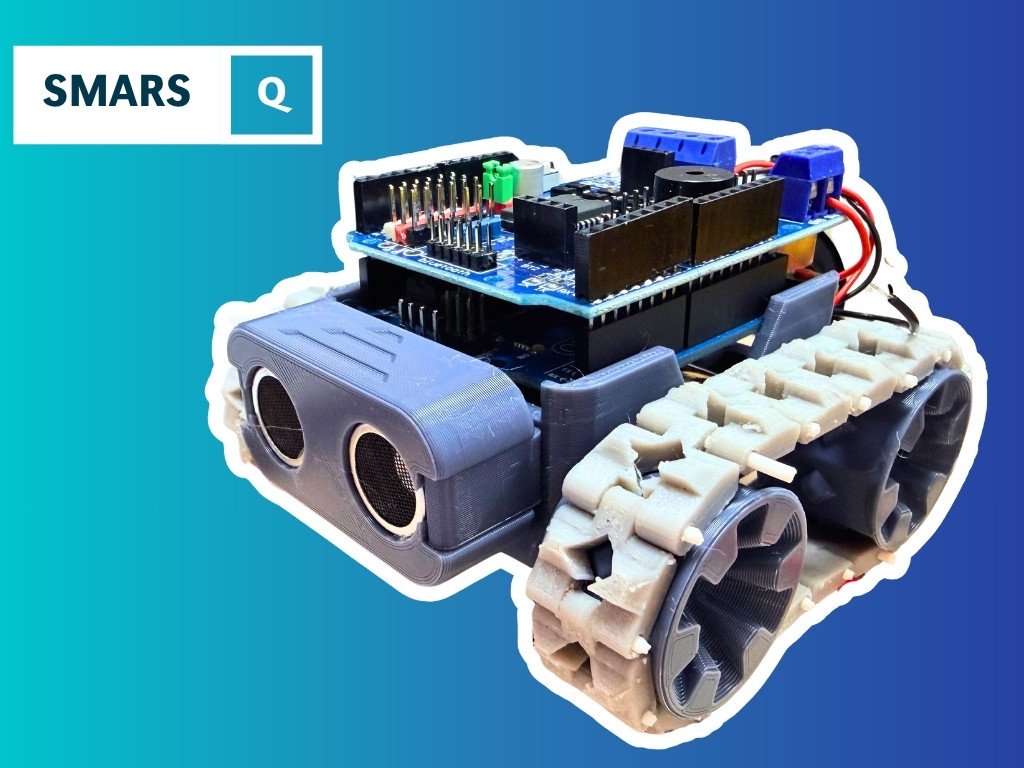
The SMARS course is a great foundation — it covers differential drive, motor wiring, and chassis design in a printable format that translates directly to combat chassis thinking.
For the electronics, the H-Bridge element explains the motor driver circuit you’ll need, and the DC Motors element covers how to choose motors with the right speed-to-torque balance for your weight class.
To design your own chassis from scratch, the Build a SMARS Robot in Fusion 360 course teaches the CAD workflow.
Look up your nearest combat robotics club — the community is welcoming to first-time builders. Bring your bot, expect it to get destroyed, learn from every hit, and come back with a better version. That cycle is the sport.
Reacts well with
More Robots & Builds
- SmSMARS
- BbBurgerBot
- PcPicoCat
- DwDrawing Robots
- RaRobot Arms
- RvRovers
- DrDrones
- HuHumanoids
- QdQuadrupeds
- HxHexapods
- PePet Robots
- RtRetro Robots
- HoHalloween Robots
Learn more on KevsRobots
Articles to read




Share this element
This page is awesome? Show some love!Did you find this content useful?
If you found this high quality content useful please consider supporting my work, so I can continue to create more content for you.
I give away all my content for free: Weekly video content on YouTube, 3d Printable designs, Programs and Code, Reviews and Project write-ups, but 98% of visitors don't give back, they simply read/watch, download and go. If everyone who reads or watches my content, who likes it, helps fund it just a little, my future would be more secure for years to come. A price of a cup of coffee is all I ask.
There are a couple of ways you can support my work financially:
If you can't afford to provide any financial support, you can also help me grow my influence by doing the following:
Thank you again for your support and helping me grow my hobby into a business I can sustain.
- Kevin McAleer
Comments