Step outside with a GPS-equipped robot and it suddenly knows where it is on the entire planet — a remarkable thing to hand to a maker for a few pounds.
What is GPS?
GPS — the Global Positioning System — is a network of satellites orbiting about 20,200 km above Earth. Your robot’s GPS module listens to at least four of those satellites at once and uses the tiny timing differences between their signals to calculate its position — a process called trilateration.
The result is a stream of NMEA sentences: small text messages arriving over a serial (UART) connection, containing latitude, longitude, altitude, speed, heading, and satellites in view. A common module like the u-blox NEO-6M outputs these at 1–10 Hz — plenty for an outdoor rover.
How a fix is found
Each satellite broadcasts a precise time signal. By comparing the tiny delays from several satellites at once, the module works out its distance to each one — and where those distance-spheres overlap is your position. It takes a minimum of four satellites to pin down latitude, longitude and altitude:
flowchart TD
    S1["Satellite 1"] -->|"distance"| GPS["GPS module"]
    S2["Satellite 2"] -->|"distance"| GPS
    S3["Satellite 3"] -->|"distance"| GPS
    S4["Satellite 4"] -->|"distance"| GPS
    GPS -->|"NMEA over UART"| ROBOT["Robot<br/>lat / lon / alt"]
More satellites in view means a tighter fix — which is why a clear view of the sky gives you 2–5 m accuracy, while tree cover or tall buildings, which block satellites, push that out to tens of metres.
Accuracy depends on conditions: a clear sky view gives you 2–5 metres, while tree cover or tall buildings can degrade that to tens of metres. For a garden rover that is usually fine; for centimetre-level work you need RTK GPS, which corrects the signal in real time.
The modules are cheap, too. A NEO-6M breakout costs under £10, connects via UART, runs on 3.3 V or 5 V, and comes with a small patch antenna.
Why robot builders care
Knowing your position unlocks an entirely different category of robot behaviour.
- Waypoint navigation — give your rover a list of coordinates and it can drive to each one in turn.
- Return-to-home — store the starting position at boot, and the robot can always find its way back.
- Drone flight control — virtually every autopilot (ArduPilot, PX4) uses GPS for position hold and autonomous missions.
GPS does not work indoors and it drifts over short distances. For indoor autonomy or fine manoeuvring, you pair it with an IMU, wheel encoders, or SLAM. Outdoors, though, GPS is the sensor that turns a simple wheeled robot into something that can genuinely explore.
Get started
The simplest first project is a GPS data reader. Connect a NEO-6M to your Pi’s UART pins (or a Pico via machine.UART) and parse the NMEA sentences — the micropyGPS library handles that for you, and within a few lines of code you are printing live coordinates to the REPL.
From there, log coordinates to a CSV file as you walk around outside, then plot the track in Google My Maps — you will see the accuracy straight away.
When you are ready for a proper outdoor robot, Rover the Mecanum Robot is a good chassis to start from — add a GPS module and a compass for heading, and you have the core of a waypoint follower.
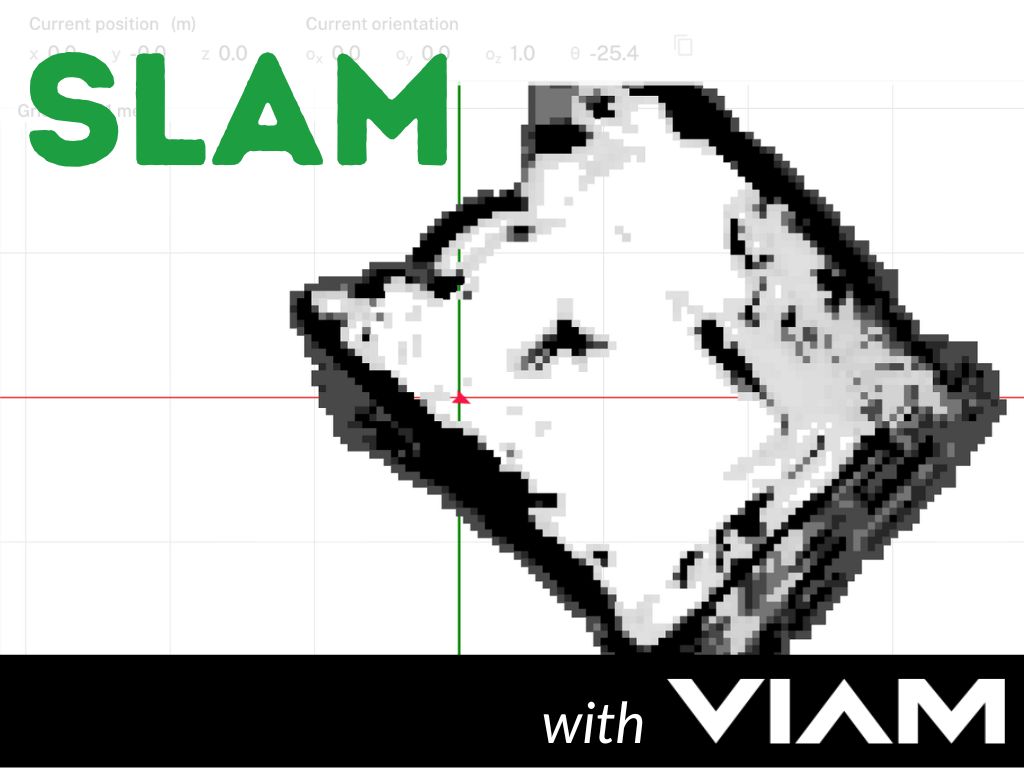
To go further into autonomous navigation, the Viam SLAM article shows how a Raspberry Pi-powered robot can map its environment — skills that pair naturally with GPS outdoors.
One practical tip: give the module a clear view of the sky and wait for a good fix before moving — cold starts can take 30–60 seconds.
Reacts well with
More Sensors
Learn more on KevsRobots
Articles to read


Share this element
This page is awesome? Show some love!Did you find this content useful?
If you found this high quality content useful please consider supporting my work, so I can continue to create more content for you.
I give away all my content for free: Weekly video content on YouTube, 3d Printable designs, Programs and Code, Reviews and Project write-ups, but 98% of visitors don't give back, they simply read/watch, download and go. If everyone who reads or watches my content, who likes it, helps fund it just a little, my future would be more secure for years to come. A price of a cup of coffee is all I ask.
There are a couple of ways you can support my work financially:
If you can't afford to provide any financial support, you can also help me grow my influence by doing the following:
Thank you again for your support and helping me grow my hobby into a business I can sustain.
- Kevin McAleer
Comments