
XIAO - the Micro Microcontroller
The Seeed Studio XIAO is a tiny microcontroller that packs a punch. In this post, I'll share my experiences and some cool things you can do with it.
2 August 20264 minute read
By Kevin McAleer
Share this article on
Table of Contents
XIAO - the Micro Microcontroller
The Seeed Studio XIAO is a tiny microcontroller that packs a punch. In this post, I'll share my experiences and some cool things you can do with it.
Video
For every project I create, I often make a corresponding YouTube video. Sometimes, there might be more than one video for a single project. You can find these videos in this section.
Explore more through this this dedicated video.
Ahoy!
Ahoy there makers!
This week I’ve been hyper obsessed with the Seeed Studio XIAO family of microcontrollers. The XIAO is a tiny, yet powerful board that has opened up a world of possibilities for my robotics projects. In this post, I’ll share my experiences and some cool things you can do with it.
XIAO
XIAO - pronouced “see-ow” - is a microcontroller that packs a punch despite its small size. There are many different versions of the XIAO, but it all started the the XIAO Seeeduino, which is a SAMD21 based board.
Seeeduino
The Seeeduino XIAO is a tiny board that measures just 20mm x 17.5mm, making it one of the smallest microcontrollers available. Despite its size, it features a powerful ARM Cortex-M0+ processor, 256KB of flash memory, and 32KB of SRAM. It also has a variety of input/output options, including digital and analog pins, I2C, SPI, and UART interfaces.
It can technically run Micropython, but the board doens’t have much memory left for storage of programs, so treat this version as more of yes it can, but you shouldn’t.
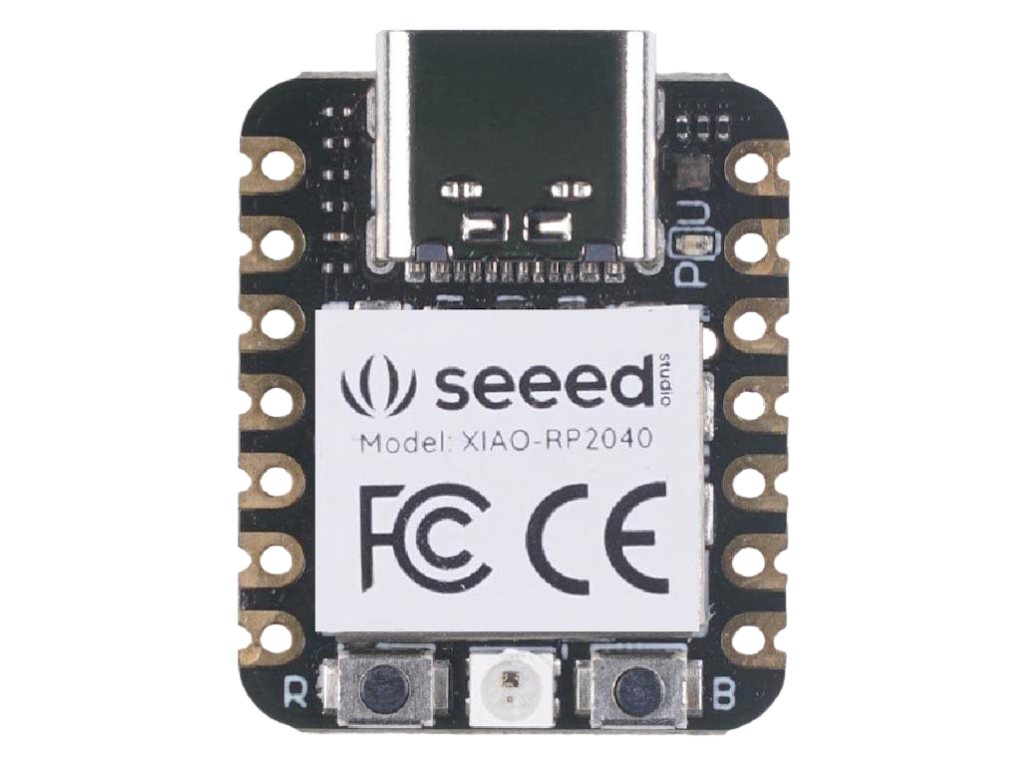
XIAO RP2040
This version of the XIAO is based on the Raspberry Pi RP2040 microcontroller, which is a dual-core ARM Cortex-M0+ processor. It has 264KB of SRAM and 2MB of flash memory, making it more suitable for running Micropython and other programming languages. This is the same processor that powers the Raspberry Pi Pico, so you can expect similar performance and capabilities.
XIAO RP2350
The XIAO RP2350 is the latest addition to the XIAO family, and it is a game-changer for robotics enthusiasts. It features a powerful ARM Cortex-M4 processor, 512KB of SRAM, and 4MB of flash memory. This makes it ideal for running complex robotics applications and handling multiple sensors and actuators. This is the same processor that powers the Raspberry Pi Pico 2, so you can expect similar performance and capabilities.
XIAO nRF52840
The XIAO nRF52840 is a powerful microcontroller that features a 32-bit ARM Cortex-M4 processor, 1MB of flash memory, and 256KB of SRAM. It also has built-in Bluetooth Low Energy (BLE) capabilities, making it ideal for wireless communication in robotics applications. This version of the XIAO is perfect for projects that require wireless connectivity and low power consumption. It also has NFC capabilities, which can be useful for certain applications.
XIAO ESP32-S3
This is the flagship of the XIAO family, and it is a powerhouse for robotics applications. It features a dual-core 32-bit Xtensa LX7 processor, 512KB of SRAM, and 4MB of flash memory. It also has built-in Wi-Fi and Bluetooth capabilities, making it ideal for IoT and robotics applications that require wireless connectivity. This version of the XIAO is perfect for projects that require high performance and advanced features.
XIAO ESP32-S3 Sense
The XIAO ESP32-S3 Sense is a variant of the XIAO ESP32-S3 that includes a variety of sensors, including an accelerometer, gyroscope, and magnetometer. This makes it ideal for robotics applications that require motion sensing and orientation tracking. It also has built-in Wi-Fi and Bluetooth capabilities, making it perfect for IoT and robotics applications that require wireless connectivity. It also has a camera; which does work with MicroPython.
XIAO Expansion Board
I also got the XIAO Expansion Board, which is a small board that allows you to easily connect the XIAO to other components and sensors. It features a variety of input/output options, including digital and analog pins, I2C, SPI, and UART interfaces. It also has a built-in voltage regulator, which allows you to power the XIAO and other components from a single power source, such as a lipo battery.
There are 4 grove connectors on the expansion board, which makes it easy to connect grove sensors and actuators. The grove ecosystem is a collection of modular electronics that can be easily connected to microcontrollers like the XIAO. This makes it easy to build complex robotics applications without having to worry about wiring and soldering.
Unlke the Qwiic or Stemma QT ecosystems, the grove ecosystem mixes digital and analog signals, which makes it more versatile for robotics applications. The grove ecosystem also has a wide range of sensors and actuators available, which makes it easy to find the right components for your project.
Grover

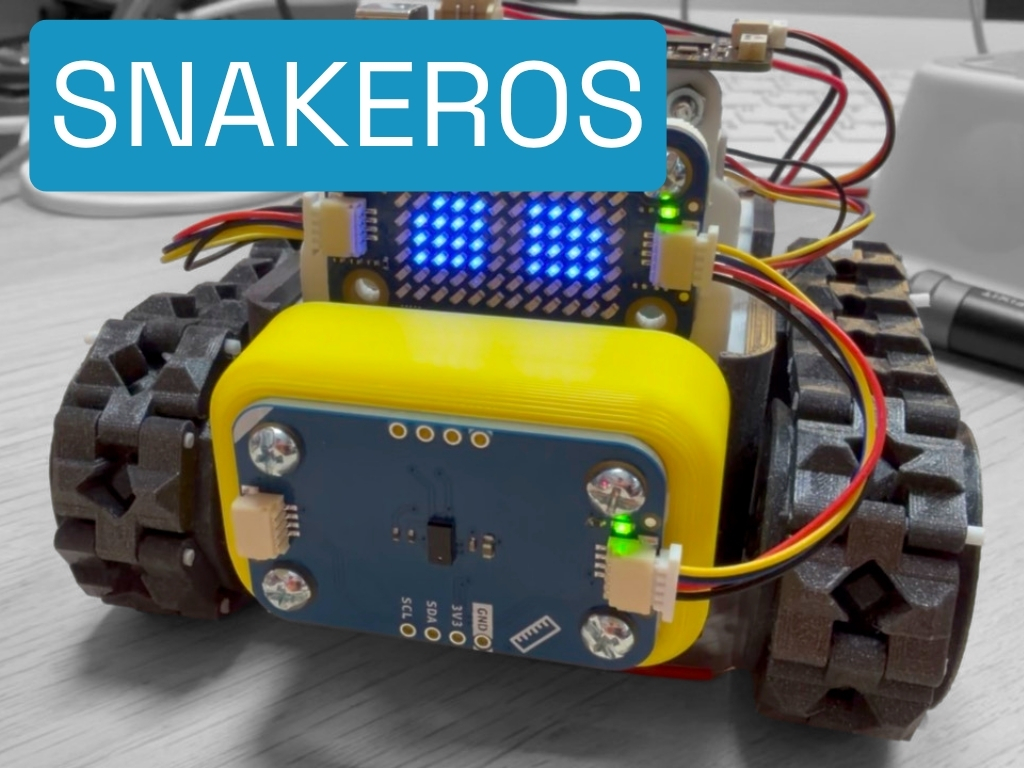
To test out the XIAO, and also to help with the development of Snakie, I’ve designed and built a small robot called Grover. Grover is a simple four-wheeled robot that is designed to be easy to build and program. It features a XIAO RP2350 microcontroller, four DC motors, and a variety of sensors, including an ultrasonic distance sensor and a 6 axis IMU.
Grover is loosely based on the Rover robot.
I’ll do a full write up of Grover when its more complete, but for now, you can see it in action in the video above. Grover is a great example of what you can do with the XIAO and the grove ecosystem.
This page is awesome - Show some love!


Comments