The Middle-Seat Trap: How Airline Algorithms Monetize Your Discomfort
Skip the seat-selection fee and you'll often land in a middle seat, even on a half-empty plane. Here's how airline seat-allocation algorithms and fare tiers turn the least popular seat into a revenue engine.
- Seat fee
- from £12
- Least wanted
- B and E
- Series
- Everyday Algorithms
This is the first in a series of posts exploring how everyday algorithms influence lives, often in ways we don’t immediately notice.
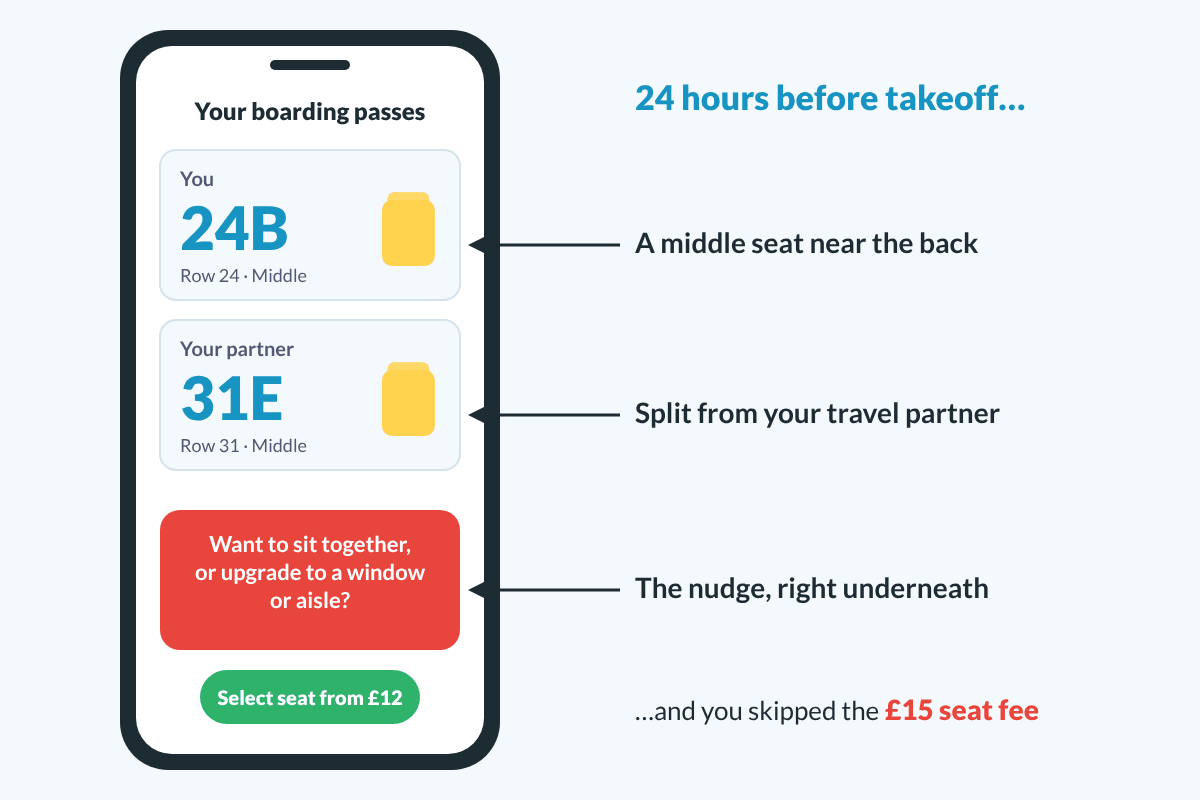
You book a cheap flight, skip the £15 seat-selection fee, and wait until check-in opens. Twenty-four hours before takeoff, you open the app to claim your boarding pass—and there it is: 24B. A middle seat near the back of the plane.
If you’re traveling with a partner, it’s even worse. You’re in 24B, and they’re in 31E. Right below your seat assignments sits a bright, inviting button: “Want to sit together or upgrade to a window or aisle? Select your seat from £12.”
If it feels like the airline is deliberately nudging you to pay up, you aren’t imagining things. While airlines insist their seat allocation systems are fair and randomized, the reality of modern airline pricing is built around a simple psychological calculation: nobody wants the middle seat, and almost everyone will consider paying to escape it.
The Seat Hierarchy: Why Nobody Wants “B” or “E”
To understand why airline algorithms behave the way they do, you only have to look at the basic physics of an economy cabin. Every row is a real estate market with three distinct tiers:
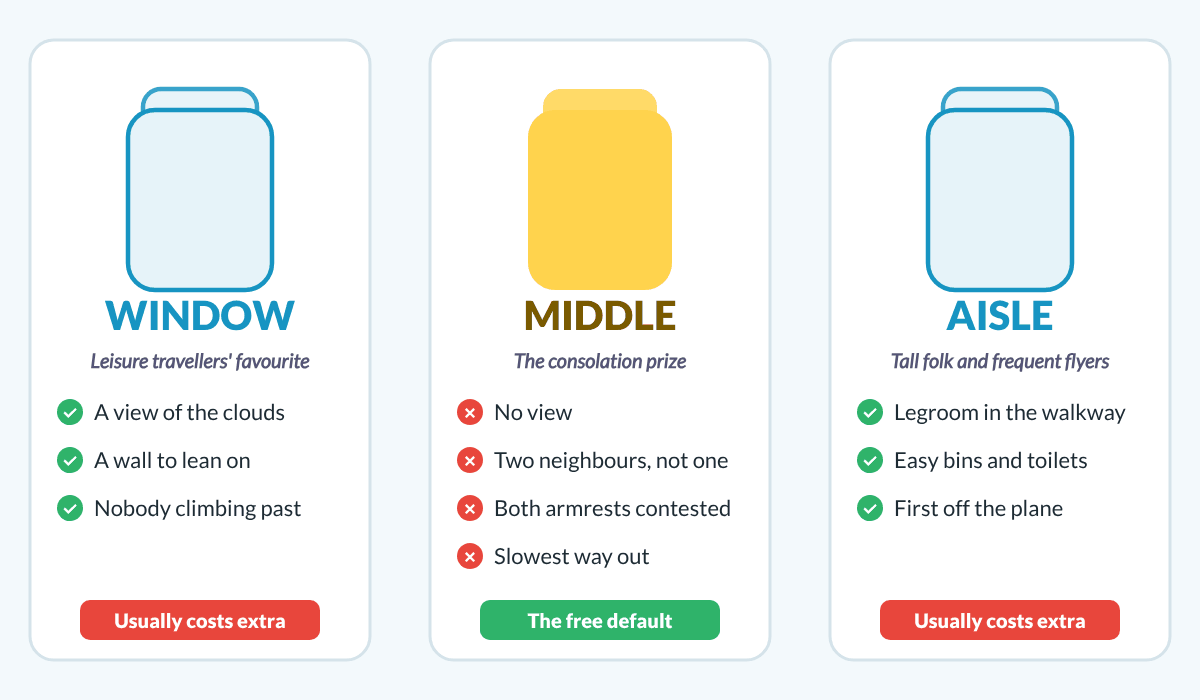
- The Window Seat: The clear favorite for leisure travelers. You get a view of the clouds, a solid wall to lean against when trying to sleep, and zero interruptions from neighbors needing to get past you.
- The Aisle Seat: The go-to choice for taller passengers and frequent flyers. You can stretch a leg into the walkway, access the overhead bins and toilets without climbing over strangers, and be among the first off the plane when the doors open.
- The Middle Seat: The universal consolation prize. You have no view, the slowest exit, two strangers invading your personal space instead of one, and an awkward, unspoken negotiation over both armrests.
Two Ways Airlines Put You in the Middle
Depending on who you fly with, getting stuck in the middle happens through one of two mechanisms—an active push or a passive squeeze.
1. The “Active” Algorithm (Ultra-Low-Cost Carriers)
On ultra-low-cost carriers—such as Ryanair and Wizz Air in Europe, or Spirit and Frontier in North America—ancillary fees (bags, priority boarding, seat selection) make up a massive chunk of total profits.
Consumer investigations, including reviews by the UK Civil Aviation Authority (CAA) and Which?, have shown that certain budget carriers assign middle seats and split up companions on the same booking at dramatically higher rates than rivals—even when the plane is half-empty.
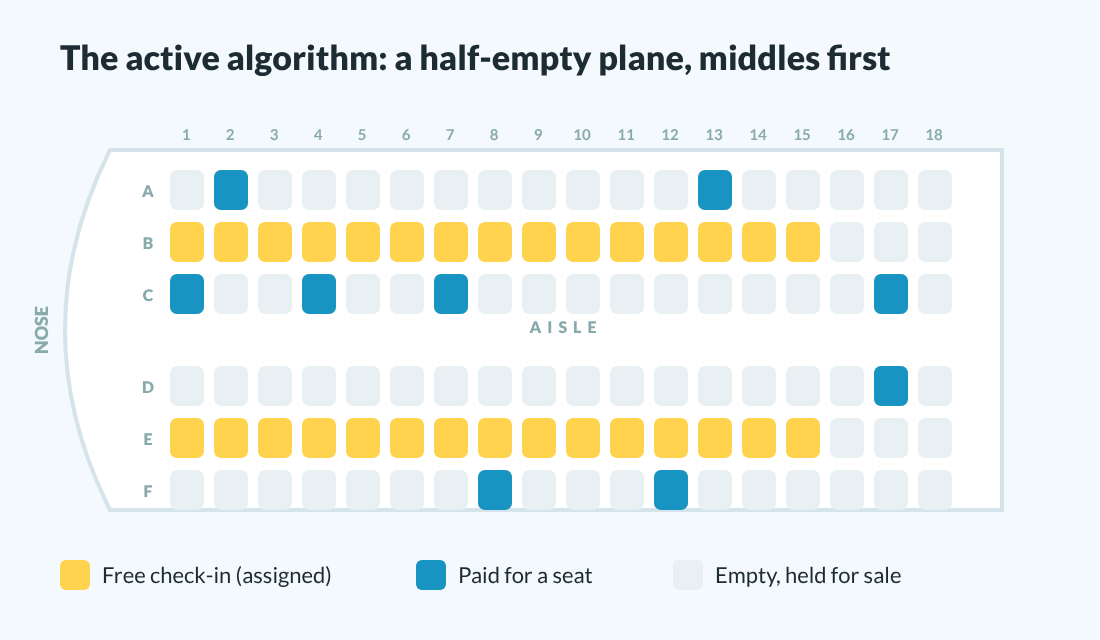
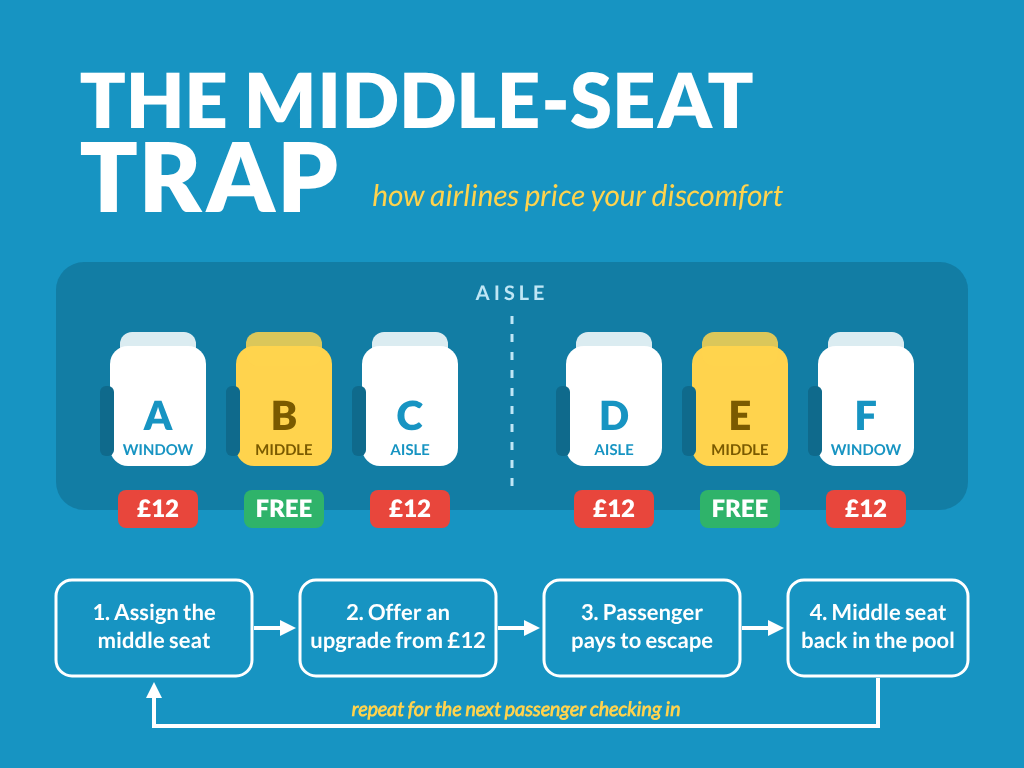
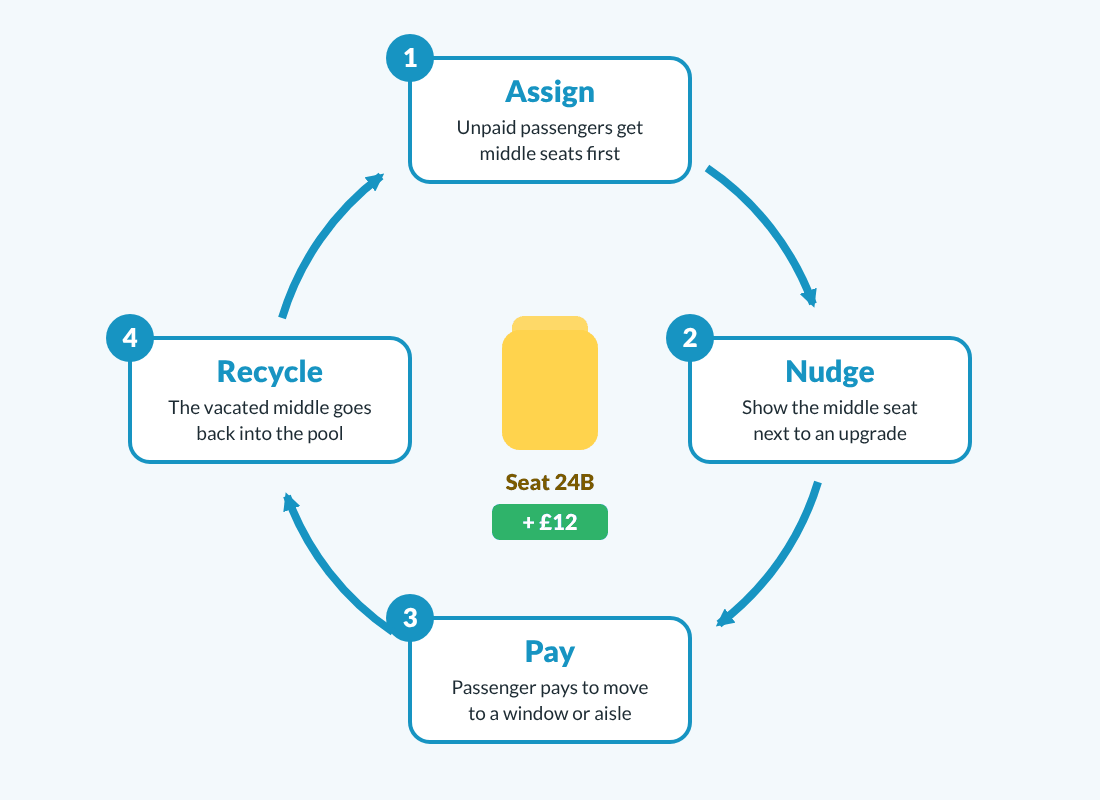
Here is how the loop works:
- When free check-in opens, the algorithm prioritizes assigning unpaid passengers to middle seats first, keeping desirable window and aisle pairs open in the paid inventory.
- Before finalizing your boarding pass, the app displays your middle seat alongside a prompt to upgrade.
- Many passengers cave and pay the fee to move to a window or aisle.
- That newly vacated middle seat goes right back into the pool for the algorithm to hand out to the next person checking in.
2. The “Passive” Squeeze (Legacy & Full-Service Airlines)
Major full-service airlines—including British Airways, Lufthansa, Air France, American, Delta, and United—generally don’t need an aggressive algorithm to put you in a middle seat. Their fare tiers do the work for them.
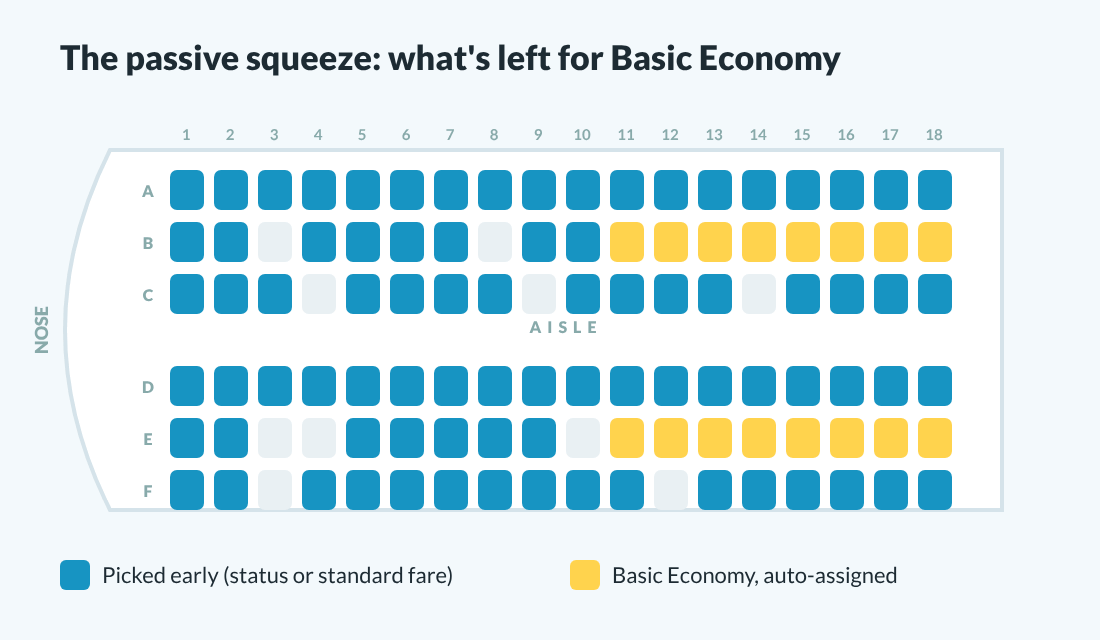
When you buy a discounted “Basic Economy” or “Economy Light” ticket, you are locked out of free seat selection until check-in. Meanwhile, frequent flyers and passengers who paid for standard tickets have been picking their seats for weeks or months. Naturally, they claim the windows and aisles first.
By the time the airline’s Departure Control System automatically assigns seats to Basic Economy passengers 24 hours before departure, the only inventory left in the system is a sea of middle seats at the rear of the aircraft.
The Ironic Loophole: Why Checking In Early Can Backfire
For decades, the golden rule of air travel was to check in the exact second the 24-hour window opened. Under modern seat-allocation algorithms, that instinct can actually work against you.
Because budget and Basic Economy systems are designed to fill undesirable middle seats first, the earliest people to check in for free often absorb the worst seats on the plane. Once all those middle seats have been handed out—and once last-minute upgrades clear out—the system has no choice left.
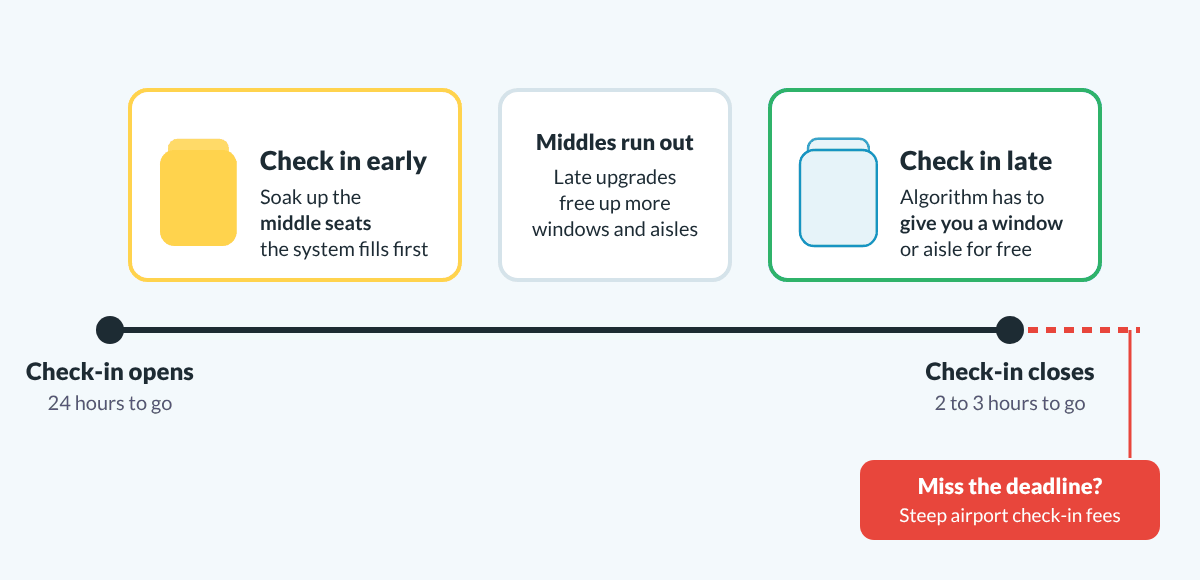
Passengers who wait until the final two or three hours before check-in closes frequently find that the middle seats are already gone, forcing the algorithm to assign them remaining unbought window, aisle, or even extra-legroom seats for free.
The Bottom Line
The next time an airline app hands you a middle seat on a seemingly empty flight, remember that it’s rarely personal—it’s just math. Airlines have realized they don’t need to raise ticket prices to make more money; they just need to make the free option slightly uncomfortable enough that you’ll gladly pay to change it.
Sources
- UK Civil Aviation Authority, Paid-for allocated seating in aviation: an update (CAP 1709) (October 2018)
- Guy Hobbs, Which?, Ryanair’s paid-for seating policy ‘puts profits before passenger safety’ (12 March 2019)
- Lauren Bell, Which?, Airlines not seating passengers at a social distance even when the middle seat can be kept free (29 September 2020)